
Liquid Biohazardous Waste Disposal
- Many liquid medical/biohazardous wastes (e.g., cell cultures or blood) that are not chemical hazardous waste or radioactive waste can be sufficiently decontaminated and then poured down a sanitary sewer drain (e.g., laboratory sink drain).
- Add household bleach to the liquid to be decontaminated until a 10% (1:10) concentration and allow bleach to remain in contact with liquid waste for a minimum of 20 minutes to decontaminate biohazardous liquid.
- Once the liquid has been decontaminated it can be poured down the drain.
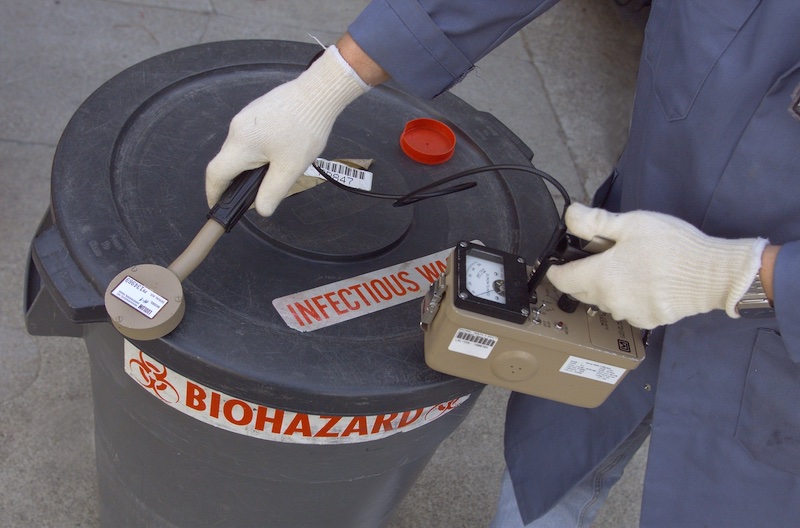
Solid Biohazardous Waste Disposal
- Solid biohazardous waste includes Risk Group 2 contaminated materials such as gloves, cell culture plates, paper products, pipettes, cell culture plates and any other solid material contaminated with infectious agents. In addition it includes Risk Group 1 contaminated material from Recombinant DNA procedures. All solid medical waste is picked up by EH&S and treated offsite for disposal.
- Inside a lab, deposit regulated medical into a container lined with a RED biohazardous bag. Deposit unregulated biohazardous waste into a container lined with a CLEAR biohazardous bag.
- Tie or tape the bag closed and carry it in the lab container to the pickup container.
- Seal the biohazard bag closed (tape, rubber band, etc.). Carry the biohazard bag to the nearest medical
- waste pickup container (Figure 1). The biohazard bag must be secondarily contained during transport in a labeled biohazard container with a lid.
- Remove the biohazard bag and deposit it in the pickup container. The pickup container must be lined with a red biohazard bag. Close the lid on the pickup container after adding the waste.
- Fill out the Medical Waste Accumulation Log, which should be affixed to the lid of each gray pickup container.
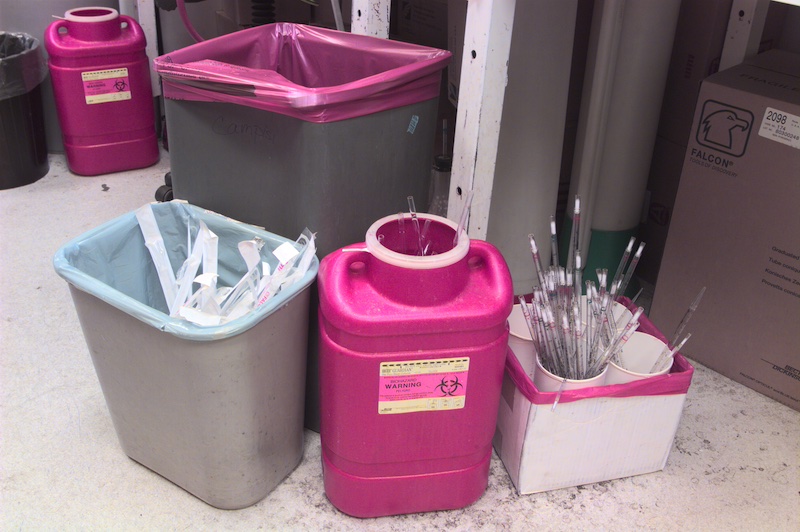
Sharps Waste
- Sharps waste includes needles, syringes, blades (razors, scalpels) and glass slides, cover slips, Pasteur pipettes, or any other object with a sharp edge contaminated with medical/biohazardous waste. These must be placed in a sharps container.
- Dispose of sharps in a rigid, puncture resistant sharps container.
- Sharps containers must be labeled with one of the following labels: “Sharps Waste”, “Biohazard,” including the biohazard symbol or “Unregulated Sharps”.
Sharps Container Disposal
- Sharps containers must be placed in the laboratory near the area of sharps waste generation. NEVER fill sharps containers past the fill line. As a best management practice, sharps containers should not be more than two-thirds full.
- Close the container when full and do not add any more waste or force any sharps into the container.
- Follow the procedures here for how to dispose of sharps waste from medical waste areas, unregulated biohazardous waste areas, and Unregulated Non-biohazardous Areas. Refer to section 3 of the Medical and Biohazardous Waste Generator’s Guide for more details and for how to dispose of sharps waste contaminated with radioactive and/or chemical materials and from a Radiological Work Area