Fill Stations
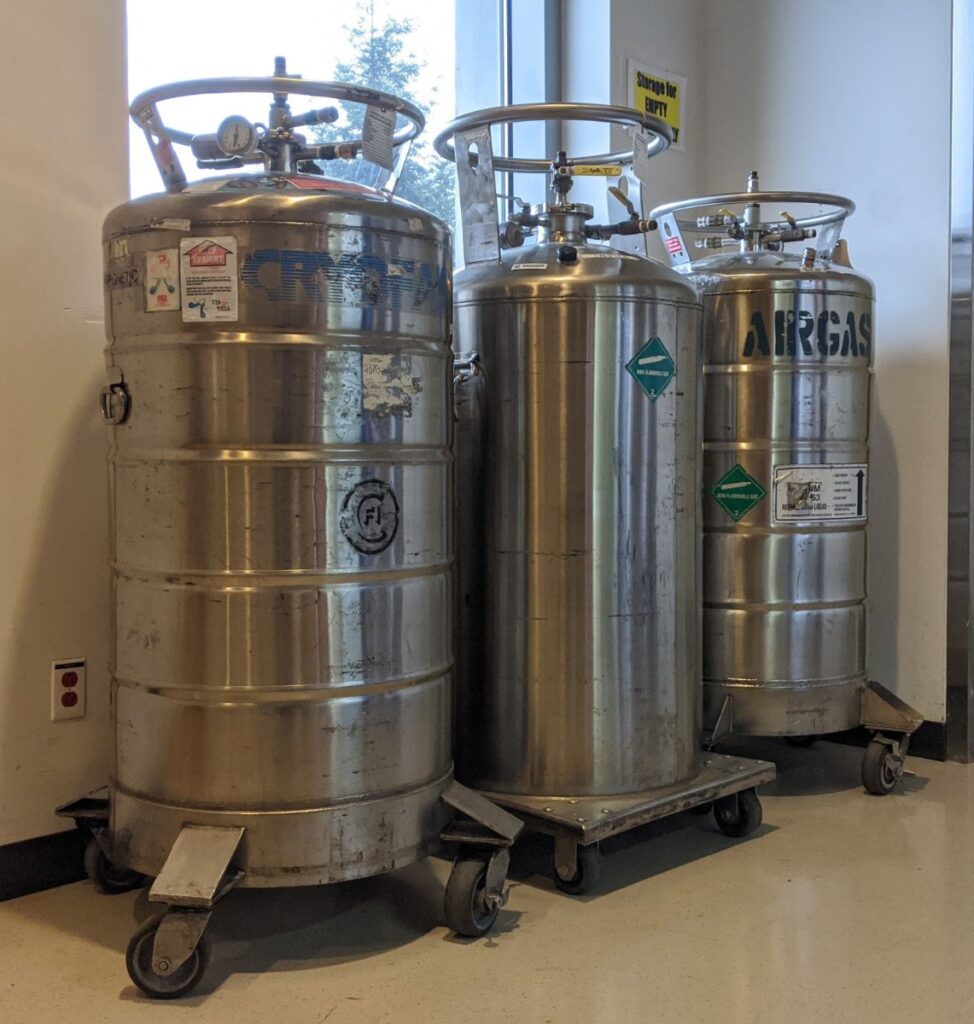
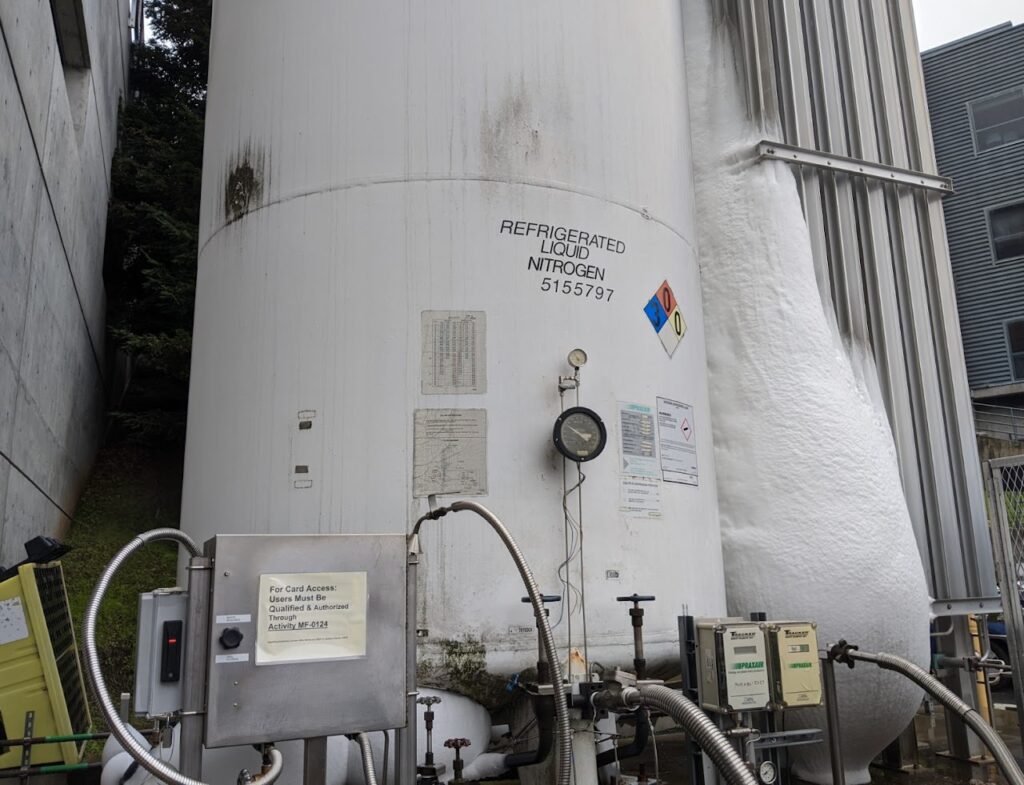
Cryogenic liquid fill stations are a long-term solution to frequent cryogenic liquid needs. Facilities and the EHS division work with a vendor to design and install a large pressurized tank outdoors. The tank can be filled from a large cryogenic liquid transport vehicle, and both gas and liquid cryogen can be withdrawn from the system. These systems are most commonly used for liquid nitrogen and can be used to fill either a low pressure Dewar or a cryogenic liquid cylinder. Often, the natural boil-off gas is also used (e.g., “house nitrogen”) after passing it through a heat exchanger to warm it to near room temperature.
On-the-Job Training
In-depth on-the-job training is required for each individual filling station, as they are all unique installations.
On-the-Job Training should include how to use the fill station, what safety features the fill station has and how to use them properly, what to do and what not to do to stay safe during the process, and supervision for your first time using the fill station, with the option for additional help as needed.
Personal Protective Equipment
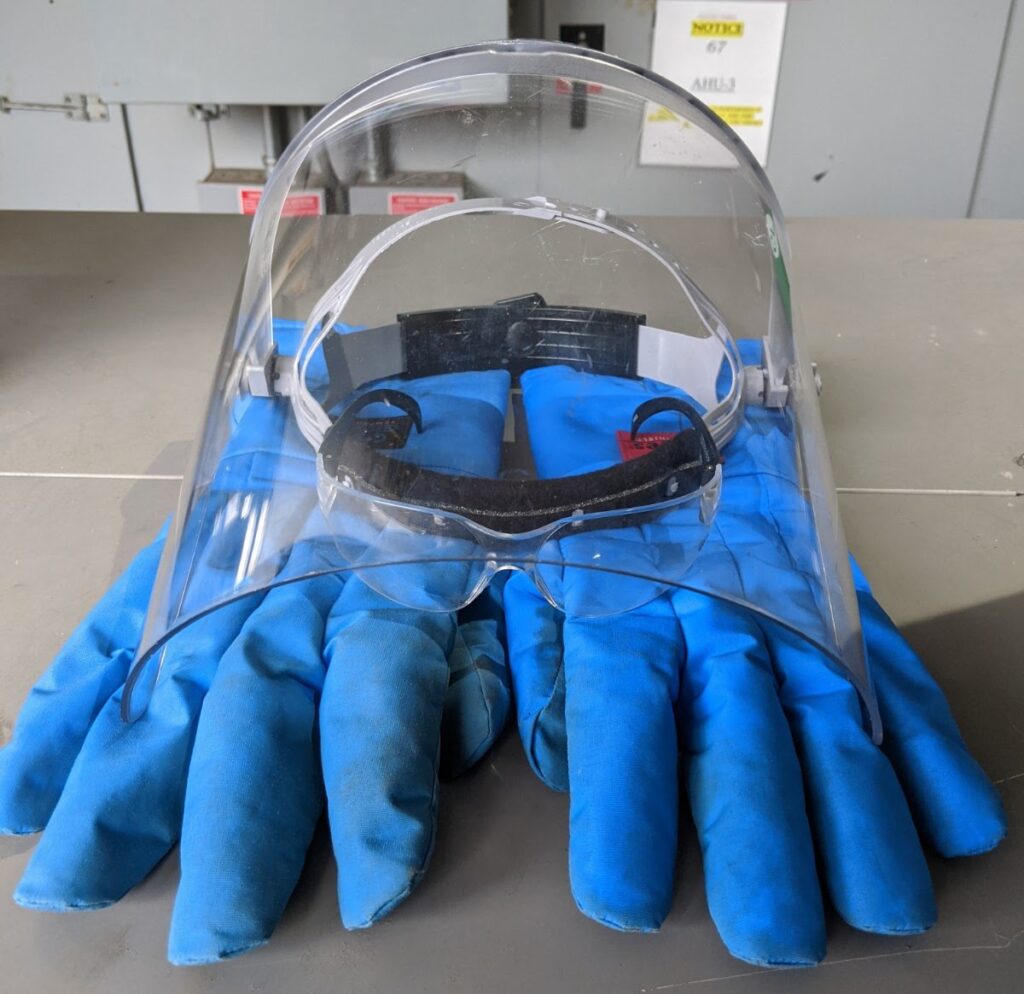
Proper Personal Protective Equipment (PPE) is a must when working with a cryogenic liquid fill station, which includes closed-toed shoes, long cuffless pants/trousers, cryo gloves, safety glasses, and a face shield. However, PPE is the last line of defense and should never be used as a primary means of protecting yourself from cryogenic liquids or cryogenically cooled objects. Cryo gloves are not intended for prolonged contact with cryogenically cooled objects, and will not protect you from immersion in cryogenic liquids, prolonged contact with a cryogenic liquid stream (more than an incidental splash) or prolonged contact with a cryogenically cooled object, such as an uninsulated hose carrying liquid nitrogen. See the PPE Selection Guide for Cryogenic Liquids and Incidents and Lessons Learned for more information on how to properly use PPE and what can go wrong when using a fill station.
Authorization for Fill Station Use
Different Divisions at LBNL may use different methods to authorize the use of bulk liquid nitrogen fill stations, but most Divisions use the WPC Activity Manager system. When writing an Activity to authorize workers to use a bulk liquid nitrogen fill station, you must include a description of what work is done with cryogenic liquids (including the use of the fill station). You must also select the hazard “Filling Dewars or handling streams of cryogenic liquid from a pressurized source” and any other hazards that are appropriate to the work. See the WPC-AM Hazard Selection Tool for help selecting the appropriate hazards for your Activity. See the Cryo Resources page for some template language that you can copy-paste into your Activity and customize as necessary.
Filling Non-Pressurized Transfer Dewars
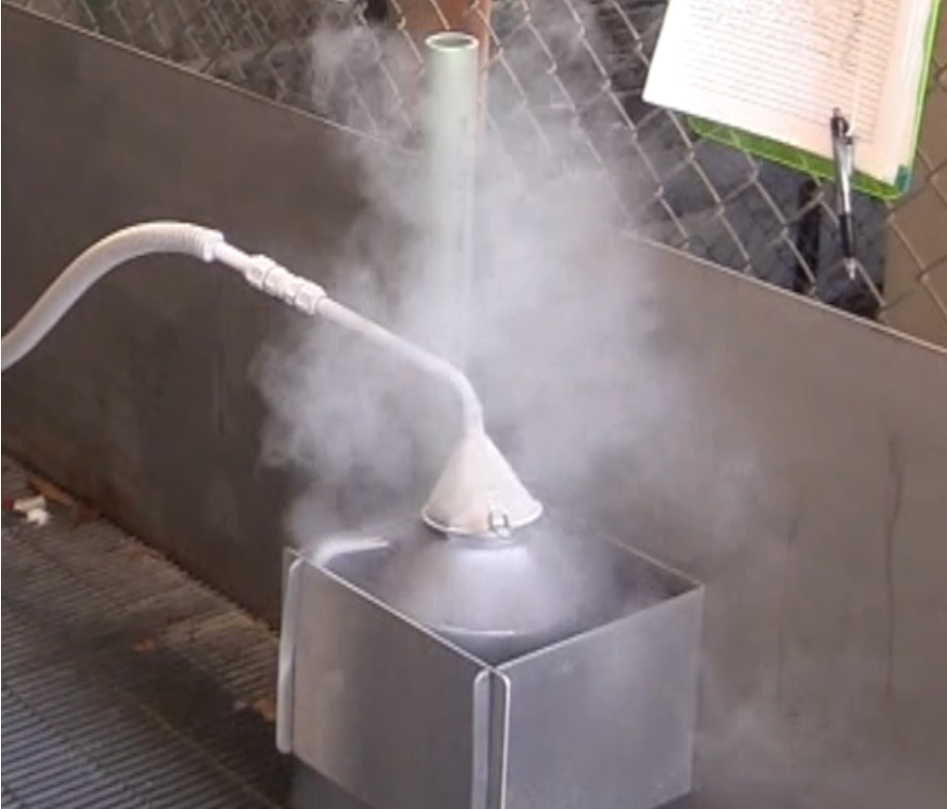
When using a fill station to fill a non-pressurized transfer Dewar, it is important never to hold the cryogenically cooled lines and to keep all parts of the body away from the Dewar while it fills. Smaller Dewars may be unstable with the fill hose inserted. In this case, use a stand, rack, or chain to secure the Dewar so that it stays upright and stable and the hose stays inside the Dewar. The fill hose should be inserted directly into the Dewar opening. If the fill hose does not fit into the mouth of the Dewar, use the fill station to fill a larger Dewar, and transfer cryogenic liquid to the smaller Dewar by pouring. It is unsafe to fill a Dewar that is too small to accommodate the fill hose and phase separator. The valve may need adjustment during the filling process, so it is recommended to position the Dewar a couple of feet away from the valve so that the valve can be accessed while staying well clear of the Dewar. When finished filling, be sure to place the fill hose back into its designated holder so that it does not build up ice, which may cause the phase separator to rust.
See the Cryogenic Liquids OJT page for more information on providing OJT for liquid nitrogen fill stations and other cryo work.
Filling Pressurized Dewars – Coming Soon!
This section is undergoing review. Check back soon!