General Information
The term Dewar is used to refer to any cryogenic liquid storage container, while the more specific term “Dewar flask” is used to refer to a small, open-top, double-walled vessel, with or without a lid. These open containers are designed to hold cryogenic liquid for relatively short periods of time to accomplish various laboratory operations. Many Dewar flasks come with a foam cover, a loose fitting cap, or a vented lid* that can reduce the evaporation rate of cryogenic liquid inside without allowing for the buildup of pressure inside the vessel. Depending on whether there is a lid, the type of lid, and the size of the container, Dewar flasks may hold liquid cryogenic liquid for anywhere from a few hours to a few days. These units can be used to cool the trap on a vacuum line, dip materials for quick freezing, cool entire reaction vessels, etc. Dewar flasks are not intended to be used for transportation of cryogenic liquids, and should be filled and used in the same room. Additionally, Dewar flasks should not be filled directly from a pressurized source. The safest way to fill a Dewar flasks is by pouring cryogenic liquid into it from a transfer Dewar.
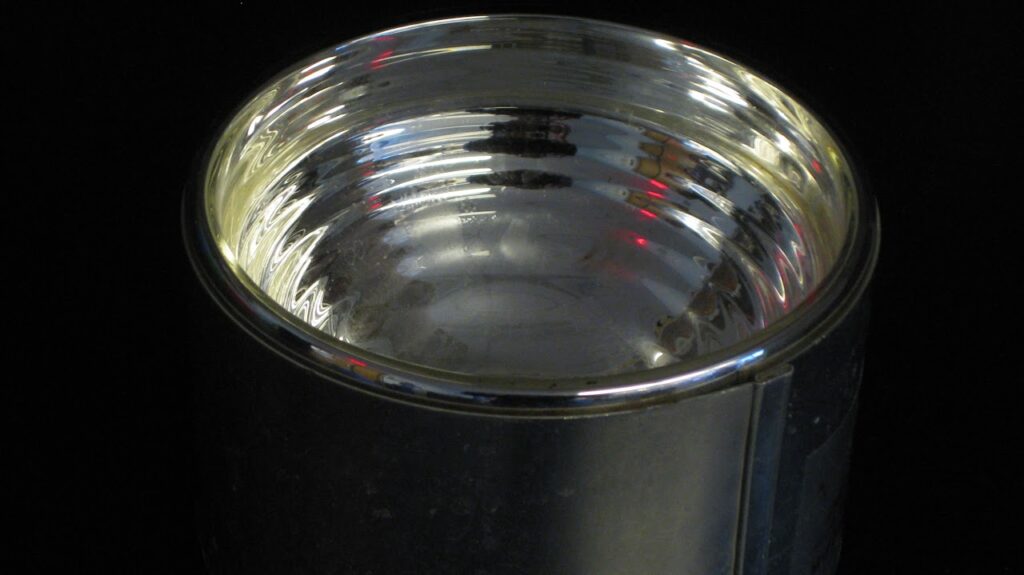
Dewar flasks are evacuated between the walls for insulation, with a protective aluminum or steel casing. The inner wall that is in contact with the cryogenic liquid may be silvered glass or metal. In the photo to the left is a Dewar flask of all stainless steel construction (top) and one with a silvered glass inner wall (bottom).
Because Dewar flasks contain an evacuated volume, when they fail they generally implode with great force. Although the initial energy is directed inward, the rebound of imploding fragments can still send shards flying away from the flask at high speed. The all-metal Dewar flasks are generally considered to be safer than the silvered glass versions because the metal does not break as easily, and if the Dewar flask fails it will not eject glass shards.
Oxygen Enrichment in Dewar Flasks
Because this type of Dewar is often open to the atmosphere, the surface of liquid nitrogen in a Dewar flask can condense air. Oxygen has a much higher boiling point than nitrogen (the other main component of air), and this leads to a build-up of liquid oxygen and/or oxygen vapor near the surface of the liquid nitrogen. This localized oxygen enrichment can present additional hazards, so it is recommended to keep the Dewar flask loosely covered as much as possible to avoid condensing oxygen.
*A note on vented lids
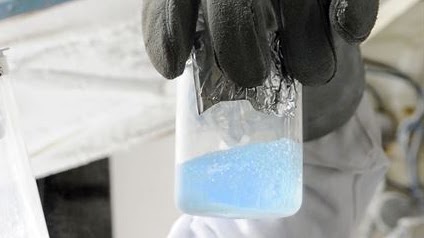
As the cryogenic liquids SME, I have heard of the vents on clip-on Dewar flask lids becoming blocked and allowing pressure build-up inside the flask. It was recommended to me that these type of clip-on lids be avoided in favor of a loose cover, such as a foam cover or loose-fitting cap. In a pinch, a piece of Styrofoam or some aluminum foil can be used to cover the flask. If your Dewar does have a clip-on vented lid, I recommend not actually engaging the clips and instead setting the lid gently on top of the vessel, or finding an alternate method to cover the flask.
Glass in Dewar Flasks
Dewar flasks that employ silvered glass are the most fragile of all cryogenic liquid containers. Although they are unlikely to implode without impact or damage to the glass, they are known to shatter unexpectedly, especially if they have been in service for a long time. When they do shatter, the process is quite energetic and fragments of glass may be ejected from the top opening of the flask at high speed. Wrapping the Dewar flask with plastic or tape with the intention of preventing or mitigating an implosion event has not been proven to be effective at preventing or containing implosion events, but is not known to cause any harm. If the unit is wrapped, the wrapping must not cover the warnings printed on the outside of the flask, or else a new warning label must be printed and affixed to the outside of the unit. Because these units tend to accumulate condensation, the label should be waterproof (or wrapped with a waterproof tape like clear packing tape). A typical warning statement is as follows:
WARNING! Vacuum flask – may shatter unexpectedly, may cause injury. Wear safety glasses.
Additional Notes on Silvered Glass Dewar Flasks and the Risk of Implosion
The risk of implosion of glass Dewar flasks cannot be completely mitigated, but there are some practices that can reduce the risk somewhat.
- Take care never to drop anything into the Dewar flask or to drop the flask itself.
- Avoid bumping the Dewar flask, knocking it over, or striking the outside of the flask. Even relatively mild bumps can cause the glass to shatter.
- Before ever using a Dewar flask for the first time, unpack and inspect it for any cracks, scratches, or chips. Tiny cracks or scratches in the glass will expand over time and eventually the glass will lose integrity and shatter.
- Some manufacturers instruct the user to wash the inside of the Dewar flask gently with soapy water, rinse it with deionized or distilled water, and dry it thoroughly with a soft, lint free material before the first use. This removes any dust, debris or residue from the packaging material. Follow the manufacturer’s instructions.
- Some manufacturers recommend pre-cooling the Dewar before filling it completely with cryogenic liquid. This can be done by adding a small amount of cryogenic liquid to the flask, swirling it, and letting it stand for 5-10 minutes before filling the Dewar the rest of the way.
- Before each and every use of the Dewar flask, inspect it for cracks, chips or scratches.
- Ensure that the Dewar flask is completely dry before filling, as water trapped within miniscule cracks and scratches which subsequently freezes (and expands) can cause the Dewar to shatter.
- Handle Dewar flasks with care. Place them only on flat, level surfaces to prevent them from tipping over. Take particular care not to drop Dewar flasks or allow them to fall any distance.
- Do not use any tools to scrape the inner glass of the Dewar flask. Do not use any hard tools to prod at contents inside a Dewar flask. Do not drop objects into a Dewar flask; place them gently.
- When using a Dewar flask to cool a vacuum trap, it is recommended to use a blast shield in front of the trap to protect the researcher from flying shrapnel in case the vacuum trap explodes.
While using the Dewar flask, it should not form ice on the outside casing, although condensation is normal. If any damage is evident in the form of cracks, scratches, chips or otherwise, immediately remove the Dewar flask from service. Do not attempt to repair a damaged Dewar flask.
Containers that are Not Intended for Cryogenic Liquids
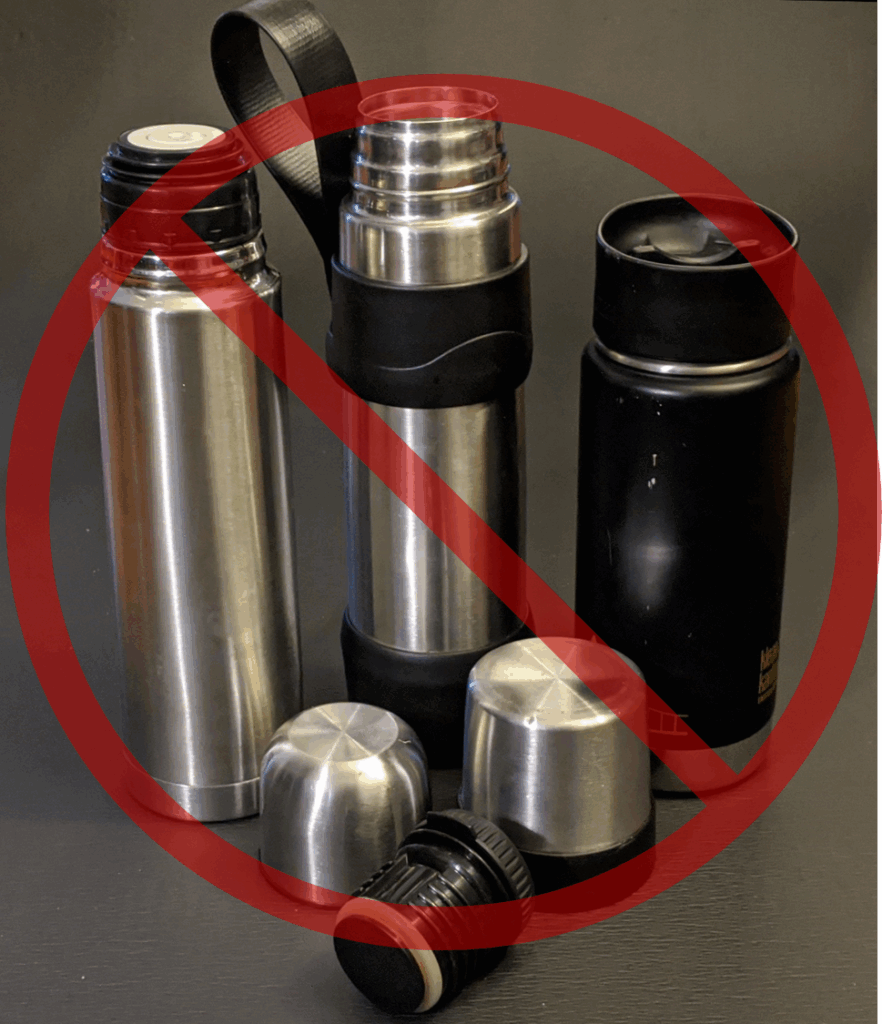
Consumer products such as Thermos® bottles and vacuum flasks intended for beverages are not approved for cryogenic applications. Although the container itself may hold cryogenic liquid in an adequate manner, the lid, even when loosely applied, does not allow for proper venting of boil-off gases and may lead to an explosion of the pressurized vessel. These containers must never be used for cryogenic liquids, even for a short period of time. Before purchasing any Dewars or “vacuum flasks” for use with cryogenic liquids, check the specifications or call the manufacturer to confirm that it is intended for cryogenic liquid service.