
General Information
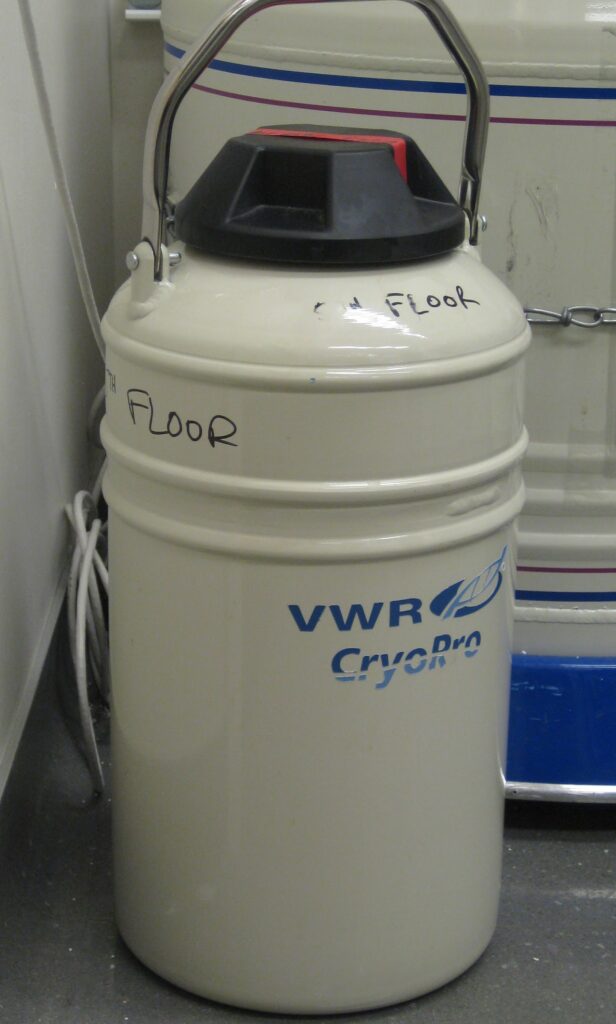
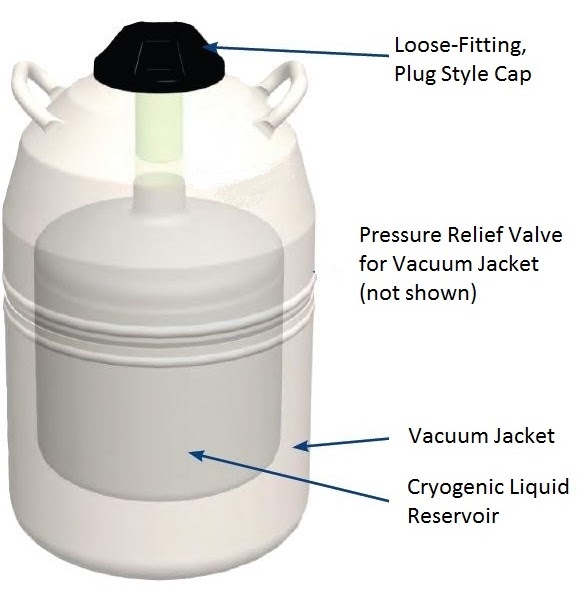
Unpressurized Dewars are intended for mid- to short-term storage of cryogenic liquids. The smaller, narrow-necked Dewars (5L and less, left photo) are typically only filled on demand and used to transfer cryogenic liquid to other systems, such as cold vacuum traps or cryostats. Larger, wide-necked Dewars (such as 30L or 50L models, right photo) are often used as storage freezers for samples that need to remain cold. Either way, these systems consist of a vacuum jacketed cryogenic liquid reservoir, which is usually made of stainless steel, aluminum, or occasionally silvered glass, with an outer casing of aluminum or steel (see photo below). A loose fitting plug style cap, usually made mostly of foamed plastic for better insulating properties, is used to allow for the release of boil-off gases so that the pressure inside the Dewar does not exceed atmospheric pressure, while also keeping air out to avoid condensation of liquid oxygen. In general, these Dewars are easy to transport. The smallest can be carried with handles, while the larger models may come with wheels mounted to the bottom, or a small cart or dolly may be needed. The vacuum space around the cryogenic liquid reservoir is equipped with a pressure relief valve in case the inner reservoir cracks and allows cryogenic liquid into the vacuum space (this valve is often located at the center bottom of the Dewar). In such a scenario, pressure might build up inside the vacuum space and rupture the Dewar, so instead it is safely vented through a relief valve.
Inspecting Dewars for Safety
It is important to inspect all Dewars carefully before use. Check that no corrosion is visible on the outside of the casing. The safety valve (usually located on the bottom of the Dewar) should be intact and should not be bypassed or defeated in any way. The plug cap should slide easily into the neck of the Dewar and should not seal or become stuck.
During use, the Dewar should not form ice on the outside of the aluminum casing or on the cap. If ice does form on the outside of the Dewar, it indicates that the Dewar may have lost vacuum and may no longer be insulating enough for cryogenic liquid storage. Additionally, if there are cracks or flaws in the inner reservoir, cryogenic liquid may get into the vacuum space and upon warming of the Dewar the entire vessel can explode from the expanding boil-off gas. If the foamed plug portion of the cap breaks off or is removed, then the remaining plastic cap will build up ice due to the lack of insulation between the plastic and the cryogenic liquid reservoir. Without proper insulation, the Dewar will lose cryogenic liquid more quickly, and have a shorter hold time. If the insulation is bad enough, the Dewar may allow more gas to escape into the room than was accounted for in the initial risk assessment for the use of cryogenic liquid in that particular room, and this can be dangerous (see oxygen deficiency hazards and asphyxiation). In the case of a damaged Dewar, it is possible that the cryogenic liquid reservoir may shatter violently and unexpectedly due to the large amount of stored energy in the pressure differential created by the vacuum jacket.
If there is any sign of damage or loss of insulation, take the Dewar out of service immediately, and mark it as defective to prevent its further use. Only individuals who are trained, qualified and experienced in the repair of this type of vessel should ever attempt to repair a damaged Dewar. Improper repairs can lead to explosions.
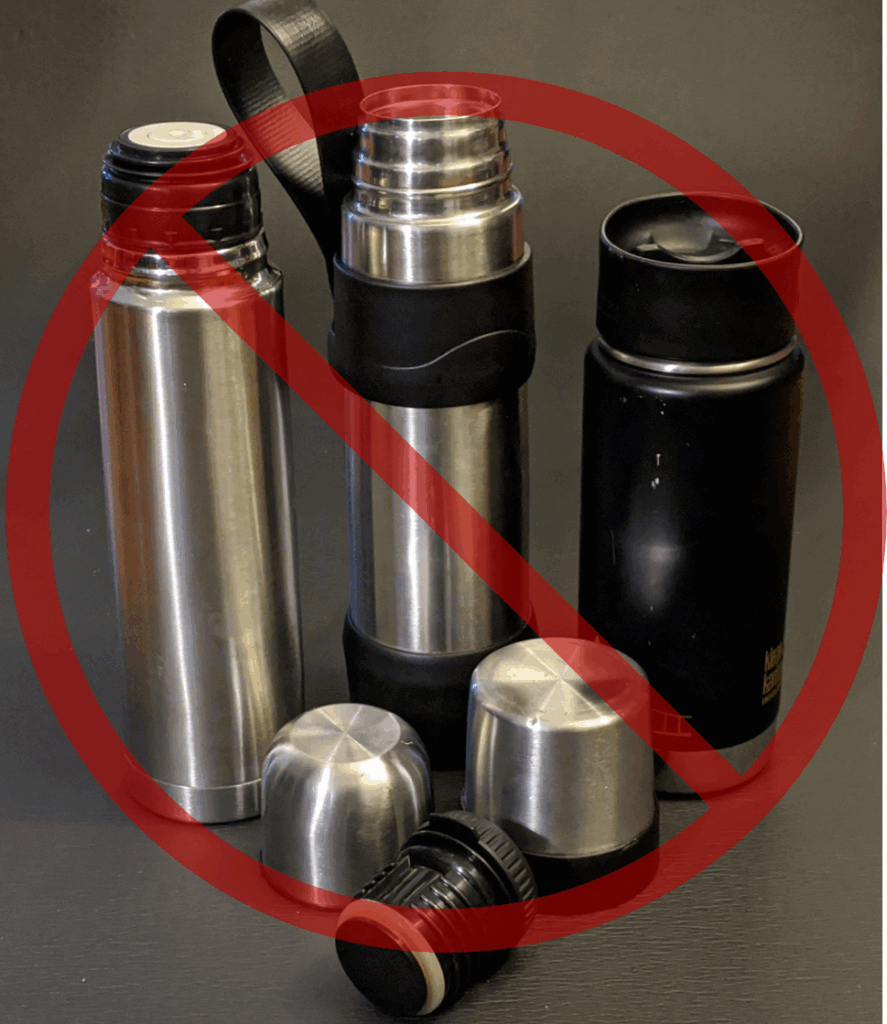
Note: Consumer products such as Thermos® bottles and vacuum flasks are not approved for cryogenic liquid applications. Although the container itself may hold cryogenic liquid in an adequate manner, the lid, even when loosely applied, does not allow for proper venting of boil-off gases and may lead to an explosion of the pressurized vessel. These containers must never be used for cryogenic liquids, even for a short period of time. Before purchasing any Dewars or “vacuum flasks” for use with cryogenic liquids, check the specifications or call the manufacturer to confirm that it is intended for cryogenic liquid service.
Making the Most of Each Fill
The most dangerous part of using these Dewars is the transfer of liquid nitrogen into or out of them. So the less frequently you transfer, the better. Keeping the lid or cap that came with your Dewar on it is the best way to minimize evaporation and avoid frequent refilling. If your Dewar did not come with a lid or cap, or if you lost it, use a loose cover such as a piece of foam or some aluminum foil. Additionally, using this type of loose cover on your Dewar flasks will help them to retain their liquid nitrogen longer so that you can top them off less frequently.
Best Practices for Pouring Liquid Nitrogen
- Use transfer Dewars of 5L or less if you intend to pour directly from them. Larger Dewars are heavy and difficult to control when lifting and tilting them, which can lead to spills and other accidents.
- If filling a portable Dewar flask, set the flask on the floor temporarily and fill it there. It is easier to control the larger Dewar when it is low to the ground. Let the liquid nitrogen in the Dewar flask settle and only move it into position after it has stopped boiling and splashing.
- Pre-cool your Dewar flasks and vacuum traps:
- Add a little bit of liquid nitrogen to the Dewar flask and cover it with some foam or aluminum foil for a few minutes to cool the interior walls of the Dewar flask.
- Then only fill it about 1/4 full before putting it on the trap and wrap the Dewar flask opening around the vacuum trap to let the vapor cool the vacuum trap for a few minutes.
- If you have a second Dewar flask, fill the spare one on the floor and use it to slowly fill up the vacuum trap Dewar flask in multiple small pours to avoid splashing.
- If you must fill a liquid nitrogen reservoir above shoulder height, use a spare Dewar flask to do the pouring into the reservoir so that you are not holding the heavy transfer Dewar up high.

