
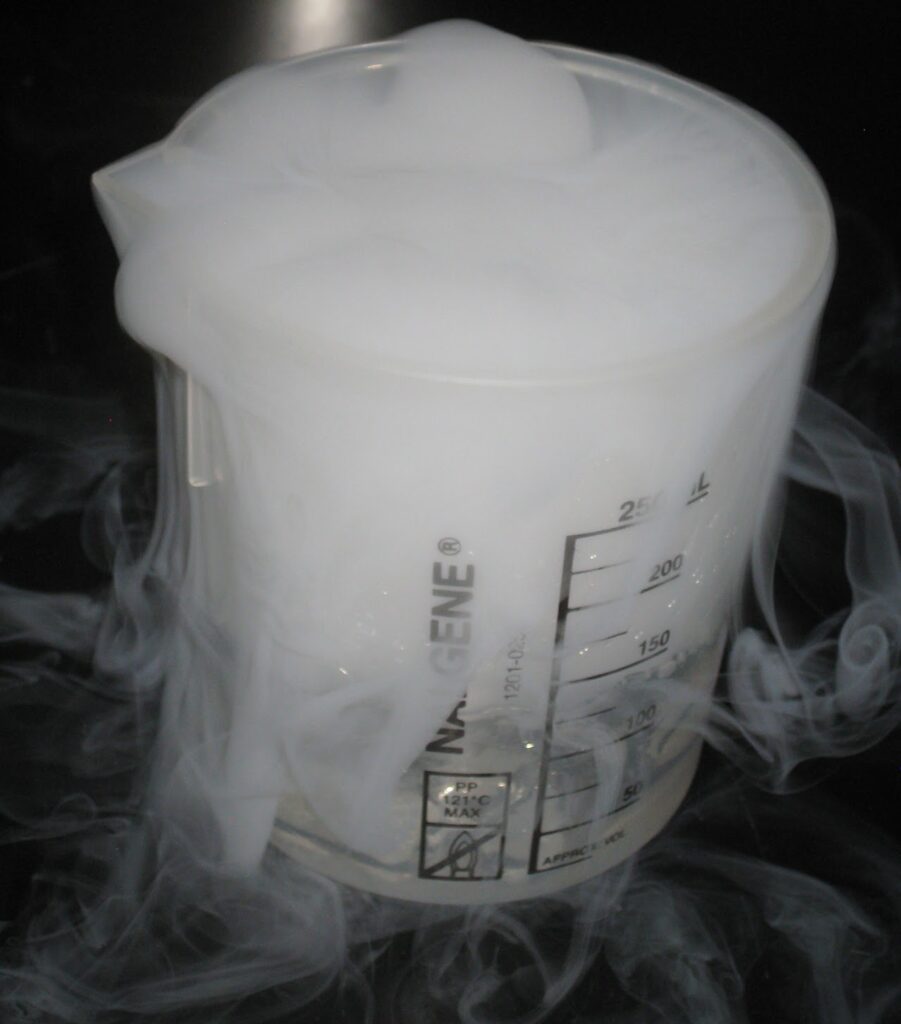
Dry ice is not a cryogenic liquid by definition, but it presents many of the same hazards as cryogenic liquids.
Properties of Dry Ice
Dry ice (solid carbon dioxide) sublimates at approximately 195K (-78 degrees Celsius). The density of dry ice varies from about 1.4-1.6 grams per cubic centimeter, while the density gaseous carbon dioxide is 0.001977 grams per cubic centimeter at standard temperature and pressure (STP, 0 degrees Celsius and 1 atmosphere of pressure). This gives rise to an expansion ratio of about 760:1, which is comparable to the inert cryogenic liquids.
Although warmer than liquid nitrogen by nearly 120 degrees Celsius, dry ice is still plenty cold enough to cause thermal burns on contact with the skin and frostbite via prolonged exposure to the cold gas as it sublimates.
Asphyxiation Hazards
Like the cryogenic liquids, dry ice storage and use can displace oxygen due to the expanding gas, leading to asphyxiation in enclosed spaces. Additionally, high levels of carbon dioxide may cause adverse effects even in the presence of adequate oxygen. Prolonged exposure to concentrations in excess of about 1000ppm (compared to a baseline concentration of ~410ppm in air) can cause headaches and fatigue, and some recent studies have shown decreased cognitive performance in atmospheres with elevated carbon dioxide (<5000ppm) (1).

A Cautionary Tale from an LBNL Employee
As a new post-doc in a lab I worked many late nights by myself. One of those nights, I went to retrieve some dry ice from the large dry-ice storage chest in the hallway to use in an experiment. There was very little dry ice left in the chest, and since I am fairly short I had to lean all the way into the storage chest to reach the dry ice. As I was scooping up the dry ice, my vision started to go dark and I realized I was about to pass out. I was just able to drop my weight down and fall back into the hallway, which probably saved my life. Before then, I had no idea that a dry ice container could present that sort of hazard, even though I did know that the carbon dioxide gas accumulates at the bottom of such a storage container. I now know that breathing a high percentage of carbon dioxide can be toxic independent of the percentage of oxygen also present, which is somewhat interesting, but I am sure glad that no one found me dead over the dry ice storage chest that next morning so long ago!
Thermal Hazards
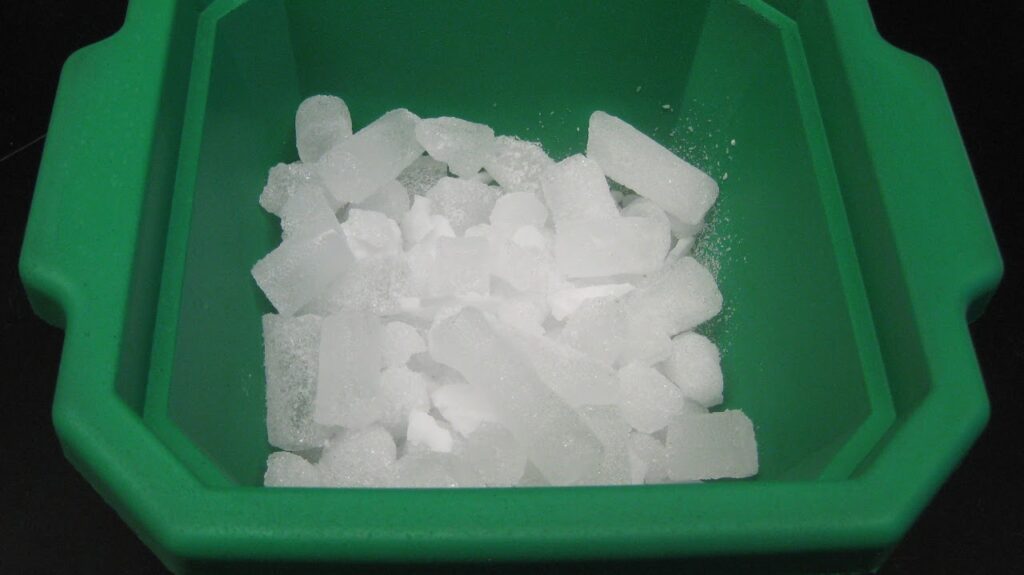
Much like the inert cryogenic liquids, dry ice is cold enough to cause acute thermal burns on contact with the skin. It also exudes a layer of gaseous carbon dioxide when in contact with warm surfaces, and will skate over them with very little friction, which can make it difficult to hold onto if it’s not in a container of some sort. Touching dry ice directly with the skin is never safe, and normal chemical resistant gloves will provide no protection.
However, unlike with the cryogenic liquids, dry ice goes straight from solid to gas phase, and so there is no worry of cold liquid permeating a thermally insulated glove or porous fabric, which means that a wider range of thermally insulated gloves can be used with dry ice than with the cryogenic liquids. Cryo gloves are also well suited for handling dry ice for short periods of time.
It’s important to remember, however that no glove, no matter how well insulated, will protect against the cold of dry ice indefinitely. Wherever possible, do not pick up dry ice by hand. Use a scoop or tongs.
Pressurization Hazards
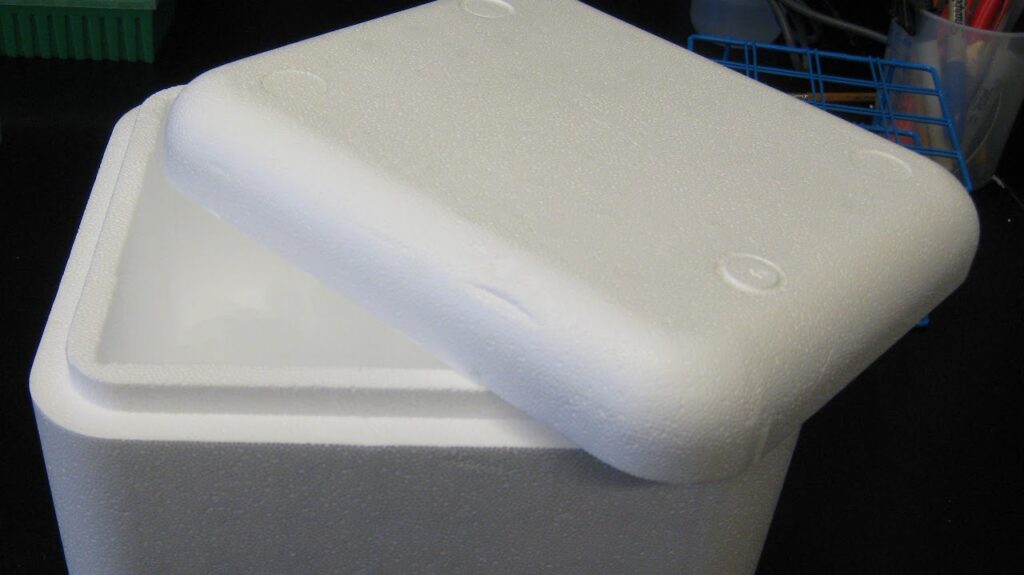
Much like the inert cryogenic liquids, dry ice expands by a factor of about 760 as it converts to carbon dioxide gas under normal (unconfined) conditions. The pressure profile under confinement is different than that of the cryogenic liquids, because at elevated pressures the carbon dioxide can liquefy. Still, dry ice trapped in a container and left to warm can produce pressures up to about 20,000psig (NIST Chemistry Webbook isochoric fluid properties of carbon dioxide). Dry ice can, will, and has on many occasions caused explosions of closed containers, even those where a lid was only loosely applied. Any container used to store or transport dry ice must be designed with plenty of pressure relief in mind. The styrofoam containers commonly used to ship items with dry ice are a good option. Although the lid fits snugly, if the pressure inside builds up too much, the lid will lift off and allow it to vent before the styrofoam container ruptures. Ice chests, “coolers”, insulated lunch boxes, and Thermos(R) style containers should never be used to store or transport dry ice.
References
- Tyler A. Jacobson et. al. Direct Human Health Risks of Increased Atmospheric Carbon Dioxide. Nature Sustainability, August 2019, pp. 691-701.

