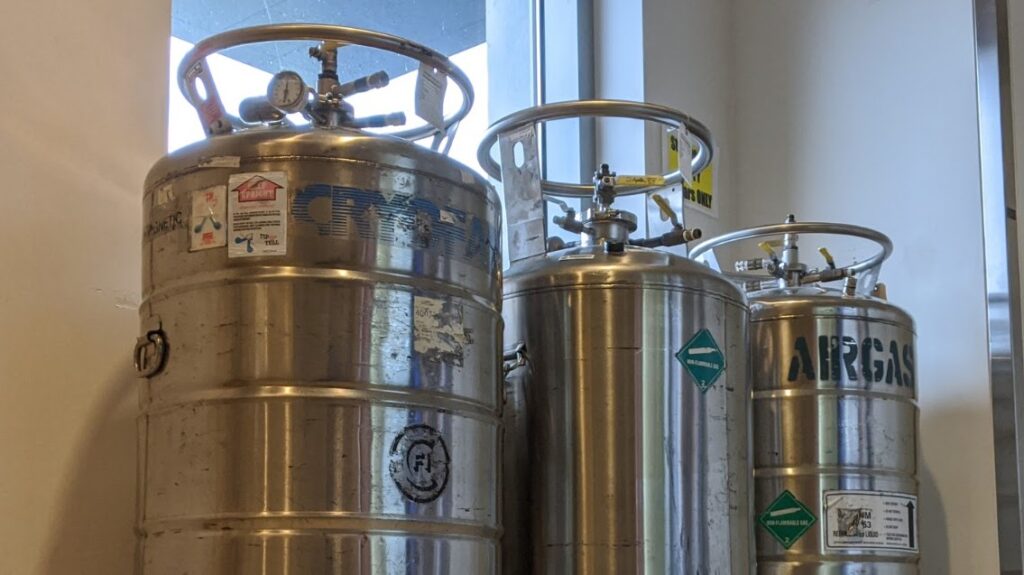
These units are intended for long-term storage of cryogenic liquids, on the order of a few weeks to a few months. They typically operate either at pressures of about 22psig for liquid use, or at higher pressures of 230 or 350psig for gas use. The 22psig cylinders tend to be better insulated and are able to hold cryogenic liquid for a longer period of time, but do not vaporize cryogenic liquid at a sufficient rate for significant gas withdrawal. The lower pressure makes withdrawal of cryogenic liquid safer than if the cylinder were operating at 230 or 350psig. Attempting to withdraw liquid cryogenic liquid from a 230 or 350psig cylinder is potentially very dangerous and highly discouraged. The high pressure cylinders are designed to ensure that the cylinder has an appreciable evaporation rate and sufficient pressure for gas operations, which often require delivery pressures greater than 100psig and/or high flow rates.
Using a pressurized cryogenic liquid Dewar to provide high purity inert gases to critical equipment is convenient and relatively safe. Operations that use a large quantity of gas can require multiple conventional gas cylinder changes per week, putting the users at risk of musculoskeletal injuries or incidents while moving the heavy gas cylinders.
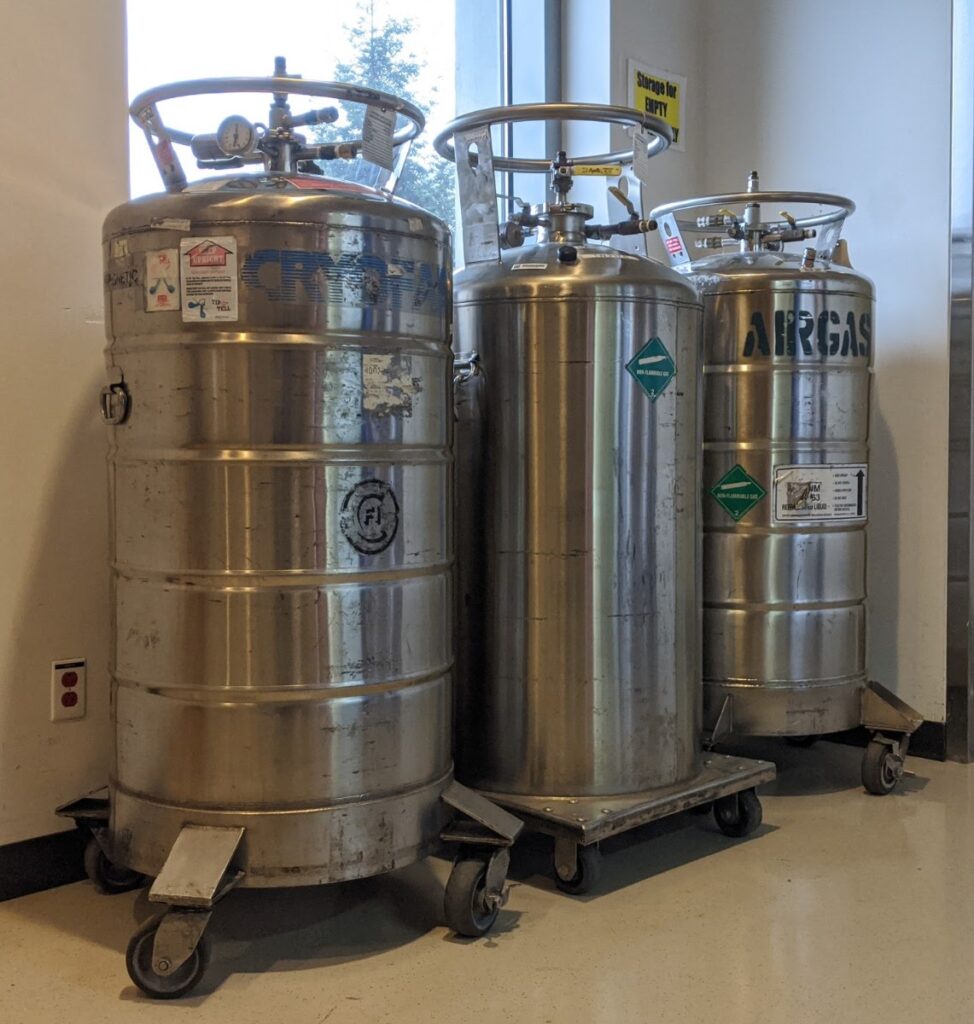
Pressurized Dewars are a convenient way to keep large quantities of inert gas (nitrogen, argon, helium) on hand. Purchasing the liquid tends to be less expensive than the same volume of gas in gas cylinders, the Dewars take up less space in the laboratory than a manifold of gas cylinders, and users of the system don’t need to constantly change out gas cylinders. Moving gas cylinders frequently is hazardous and can lead to injury, whether acute from a handling mishap, or a chronic musculoskeletal injury from repeated handling of heavy cylinders. If the Dewar is rented from the supplier of the liquefied gas, then the supplier will generally drop off the Dewar directly at its point of use and take the old Dewar away for you, so the users of the system don’t ever need to move the heavy Dewars (which can weigh upward of 600 pounds).
Withdrawing gas from a pressurized Dewar is no more difficult than from a standard compressed gas cylinder. Simply locate the gas use valve, and hook up a CGA regulator to it. If using the Dewar exclusively for gas use, it is recommended that you lock out the liquid use valve so that it isn’t inadvertently opened. If you don’t have a valve lockout device available, some electrical tape can be all that’s needed to prevent people from accidentally opening the wrong valve.
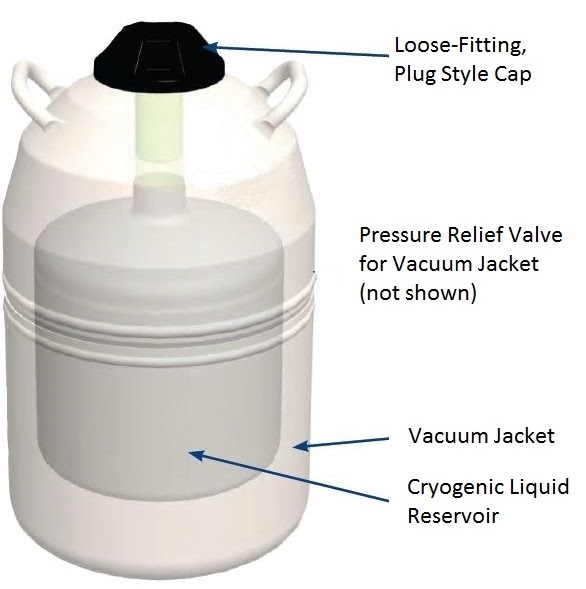
The design of pressurized cryogenic liquid Dewars is necessarily more complex and robust than the atmospheric pressure Dewars (see diagram to right) due to the large pressures involved. When extracting cryogenic liquid from the cylinder, the vapor pressure of the cryogenic liquid causes the liquid to flow up through a tube and out the liquid valve. Some cylinders may come with a liquid valve built in, while others may require a tube to be inserted into the cylinder, often called a “stinger”. The cryogenic liquid will be released at high pressure because of the pressure inside the cylinder. Use a lower pressure (22psig) cylinder for liquid service to minimize the risks from high pressure cryogenic liquid streams.
Gas is extracted through a separate valve, which draws from the headspace of the cylinder, above the liquid level. This gas will be just barely warmer than the boiling point of the cryogenic liquid and still poses a significant hazard for burns and frostbite, but the temperature rises quickly as you get farther from the valve outlet. The high pressure (230 or 350psig) cylinders are usually preferred for gas use because they can deliver higher flow rates, but for applications which require only low flow rates and low pressures, the low pressure cylinders may be used.
In order to achieve even higher gas flow rates, many cryogenic liquid cylinders are equipped with a gas use vaporizer or pressure builder, which directs cryogenic liquid through tubing outside of the normal liquid reservoir to vaporize it for immediate use as a gas. This allows the user to manually increase the pressure inside the cylinder for an application that requires it. Conversely, where pressure increases more rapidly due to cryogenic liquid evaporation than the gas is used, some cylinders have an economizer installed to direct the excess pressure inside the cylinder to the gas use valve instead of using the gas use vaporizer, reducing the amount of cryogenic liquid lost to venting through the pressure relief valve.
Having problems with a pressurized Dewar? See the troubleshooting guide here.
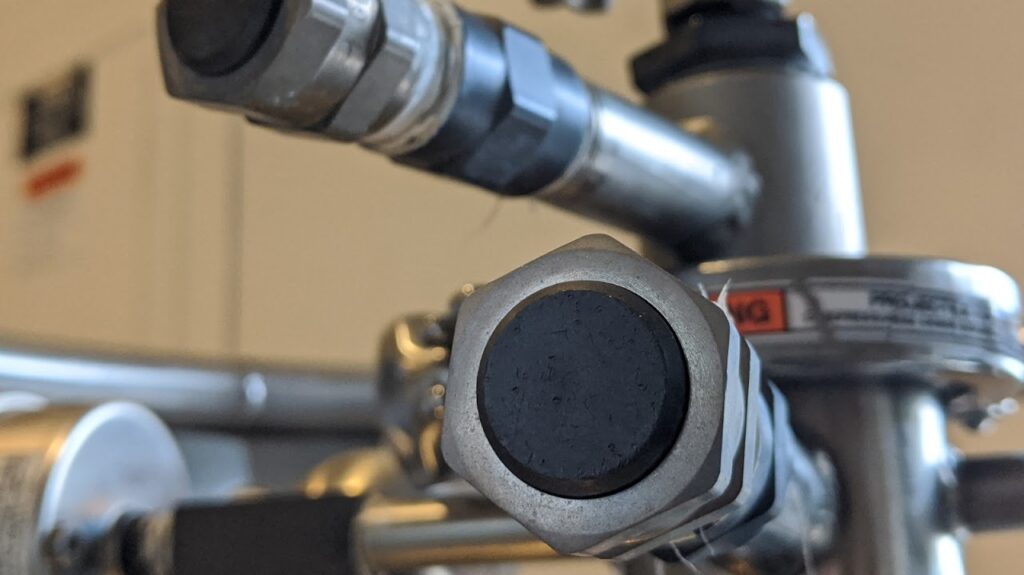
Cryogenic liquid cylinders will always have a pressure gauge, a pressure relief valve and a rupture disk (sometimes multiple) installed to prevent over-pressurization of the cylinder. The pressure relief valve and rupture disk must be able to withstand cryogenic temperatures without losing performance or altering the pressure at which they vent. A vent valve provides another means of reducing the pressure inside the cylinder, but manually.
Before withdrawing gas from a cryogenic liquid cylinder, it is important to verify that the gas use valve is connected and not the liquid valve.
NOTE: Pressurized cryogenic liquid Dewars are only intended to be operated in a fully upright position. Never attempt to operate a tilted cylinder (e.g., while on a cart), and never lay a cryogenic liquid cylinder on its side.
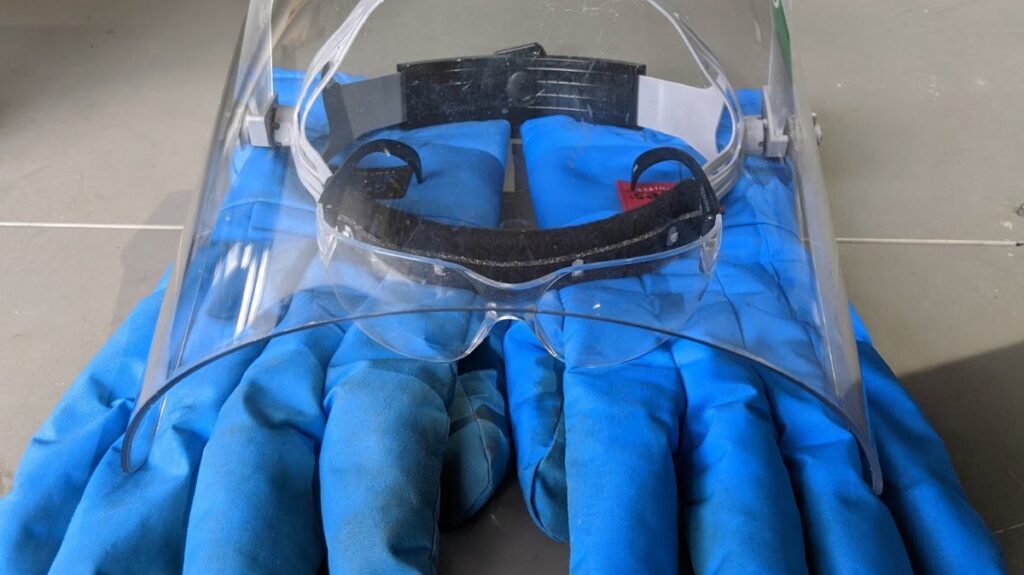
Filling a Pressurized Cryogenic Liquid Dewar
Before filling a pressurized cryogenic liquid Dewar, it is important to inspect the Dewar for damage and to verify that the Dewar is approved and designed for the particular cryogenic liquid service. For example, liquid helium, liquid oxygen and liquid hydrogen in particular all have very specific requirements for the design of the Dewars; these gases should never be filled into a Dewar that is not of the correct design. Some cryogenic gases are even dangerously incompatible, such as LH2 and LOx – an explosive combination. Most pressurized cryogenic liquid Dewars will indicate what type of gas they are meant to hold, either by way of a label with the gas identification, or with a clearly marked tag. Never fill a pressurized cryogenic liquid Dewar with a different gas than the one for which it is marked.

