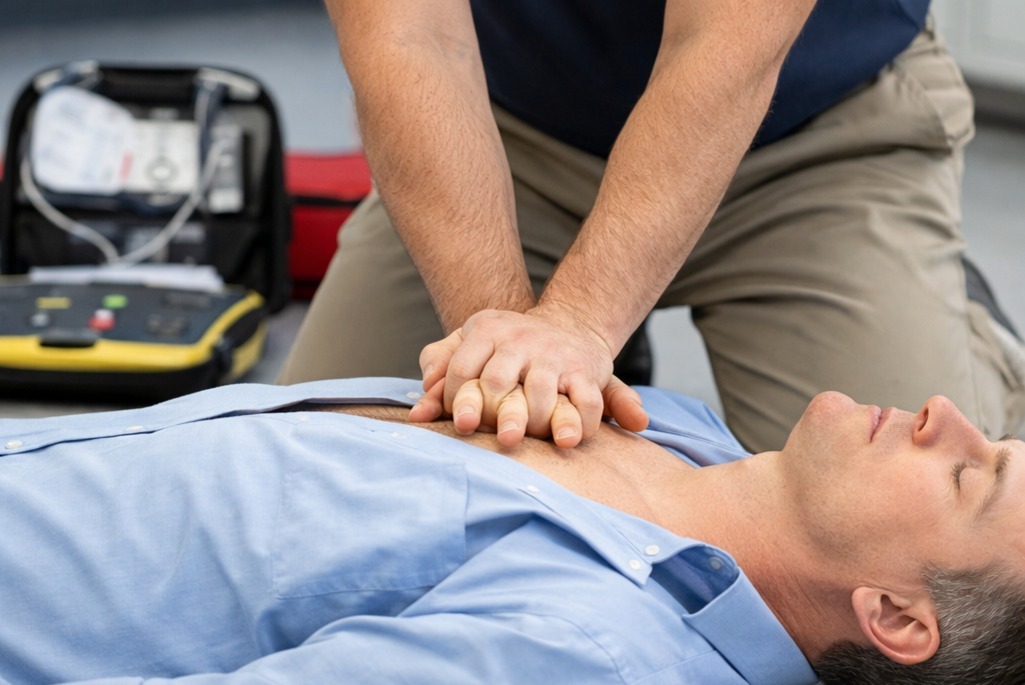
Every year, from June 1st to 7th, we observe National CPR and AED Awareness Week. It is a week dedicated to a simple but important truth: in the early stages of an out-of-hospital cardiac emergency, the most important person in the room isn’t the doctor in the ER or the paramedic in the ambulance – it’s you.
Sudden cardiac arrest (SCA) is a leading cause of death in the US and around the world. It occurs when the heart’s electrical system malfunctions, causing it to unexpectedly stop beating normally. Though it can occur as part of a heart attack, unlike a heart attack, where blood flow is blocked but the heart more often keeps beating, SCA is an “electrical” problem that acts like a power outage. Without immediate intervention, the results are fatal within minutes. Also, unlike a heart attack, where treatment requires the resources of a hospital, SCA can start to be treated immediately, by anyone willing to help.
The Math of Survival
The statistics are a sobering reminder of why bystander action is critical. Currently, about 350,000 cardiac arrests occur outside of a hospital each year in the United States alone. The survival rate for these individuals is approximately 10%.
However, there is a powerful “multiplier” effect:
- Bystander CPR can double or triple a person’s chance of survival.
- Early Defibrillation (using an AED) can increase survival rates to as high as 50–70% if delivered within the first few minutes.
For every minute that passes without help, the victim’s chance of survival drops by about 10%. By the time an ambulance arrives—which takes an average of 8 to 12 minutes—the window of opportunity has often closed. This is why “bystander” intervention is the literal bridge to life.
CPR: It’s Easier Than You Think
Many people hesitate to help because they fear they aren’t “trained enough” or might hurt the person. The reality is that Hands-Only CPR is incredibly simple and effective. You don’t need to be a medical professional; you just need to push hard and fast in the center of the chest to the beat of a fast song like “Stayin’ Alive.” This keeps oxygenated blood flowing to the brain and vital organs until professional help arrives.
The AED: Your High-Tech Sidekick
An Automated External Defibrillator (AED) might look intimidating, but it is designed for people who have never seen one before. These devices are found in airports, gyms, and office buildings for a reason. Once turned on, the AED provides clear, calm voice prompts that walk you through every step.
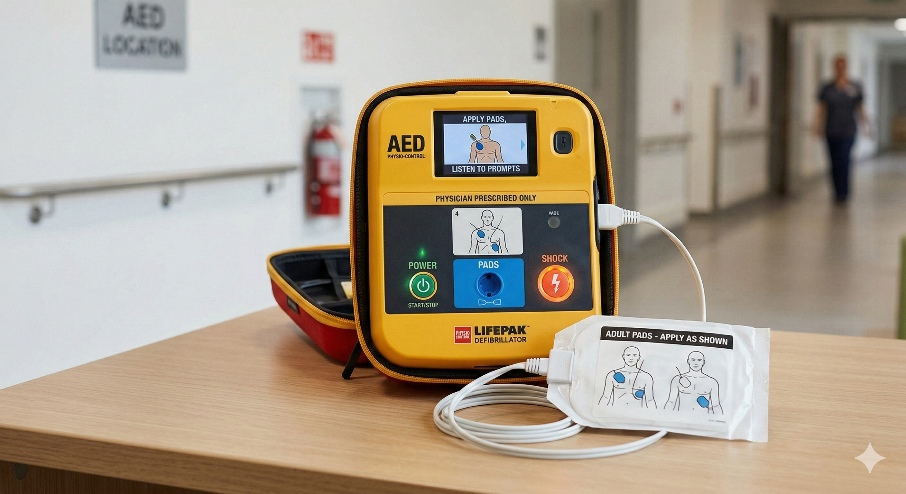
After adhesive pads are applied to a victim’s chest, it will analyze the victim’s heart rhythm and determine whether a “shock” is needed – it will never deliver a shock unless the person actually needs one. You cannot “accidentally” shock someone who is not in cardiac arrest.
Overcoming the fear
If you are worried about legal trouble, rest easy: Good Samaritan Laws exist in every state to protect bystanders who act in good faith to save a life.
Anyone can help
This AED/CPR Awareness Week, take a few minutes to see how to perform Hands-Only CPR and use an AED. Many buildings at the Lab have AEDs within them. Knowing, ahead of time, where the AEDs are located, in any buildings you work or visit, can shorten the time to access one, and more easily save a life. Be willing to step forward when the clock starts ticking. Your hands could be the reason someone gets to go home to their family.
For more information, go to the Health Service CPR and AED webpage.

